
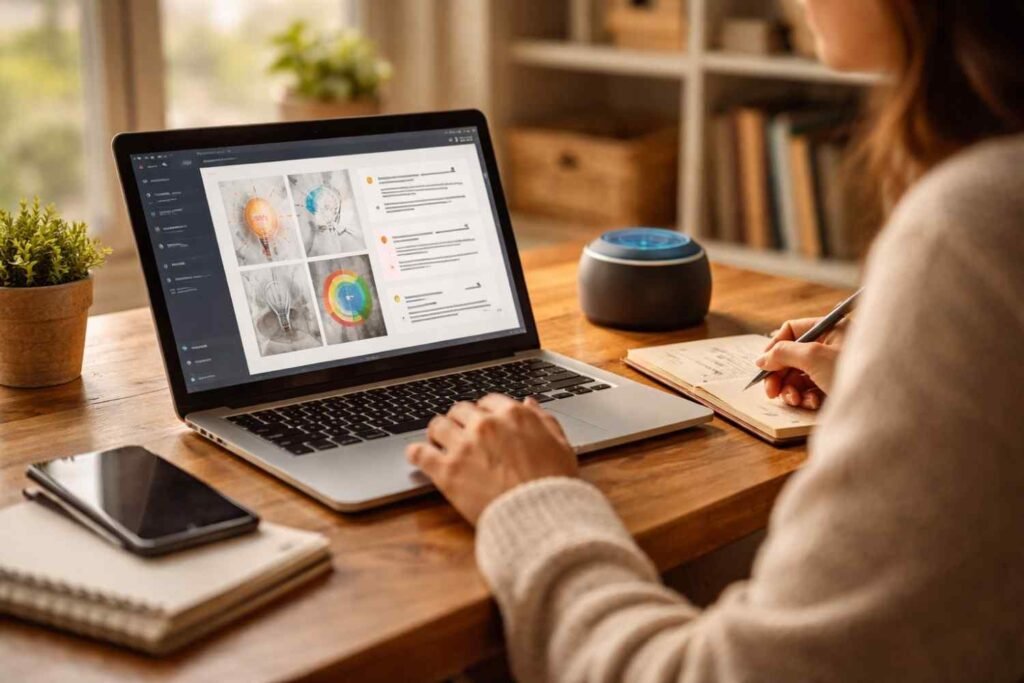
A few years ago, most people thought artificial intelligence would eventually replace large parts of the workforce. The conversation was mostly about automation, job loss, and machines doing everything faster than humans. But what actually happened in workplaces was very different. Instead of replacing people, AI started becoming a tool that helps people work faster, think better, and focus on more meaningful tasks.
In many offices today, AI is quietly working in the background. It drafts emails, summarizes long documents, analyzes data, schedules meetings, and even helps brainstorm ideas. What used to take hours now takes minutes. The interesting part is that as AI started handling repetitive and technical tasks, human creativity became even more important, not less.
The Real Role of AI in the Workplace
AI is not really a replacement for human workers. It is more like a digital assistant that handles routine work so people can focus on problem-solving, creativity, and decision-making. Most jobs today involve a mix of repetitive tasks and creative thinking. AI is very good at repetitive and data-heavy tasks, but it struggles with emotional intelligence, cultural understanding, and original thinking.
This is why many companies now use AI to improve productivity rather than reduce staff. Employees spend less time on boring tasks and more time on strategic and creative work. This shift is changing how people work, not eliminating the need for people.
How AI Helps in Work Every Day

In most workplaces, AI is already being used in simple but powerful ways. Many people use AI without even realizing how often it supports their daily tasks.
Some of the most common ways AI helps in work include:
- Automating repetitive tasks like data entry and scheduling
- Writing email drafts and summarizing documents
- Analyzing data and generating reports
- Helping with brainstorming and idea generation
- Managing workflows and project timelines
- Improving customer support through chat systems
All of this improves workplace efficiency and saves time, which allows employees to focus on more valuable work.
AI as a Creative Copilot
One of the most interesting developments is how AI affects society and supports creativity instead of replacing it. Many professionals now use AI as a starting point rather than a final solution. It helps overcome the blank page problem by generating ideas, outlines, or rough drafts that humans can refine and improve.
AI helps the creative process in several ways:
- Ideation and brainstorming by generating multiple ideas quickly
- Rapid prototyping to test different concepts faster
- Information gathering and summarizing research
- Handling technical tasks so creators can focus on ideas
This process actually makes people more creative because they spend less time on technical work and more time thinking, experimenting, and improving ideas.
Why AI Cannot Replace Human Creativity

Even though AI can generate text, images, and designs, it still cannot truly replicate human creativity. Creativity is not just about combining information. It comes from personal experience, emotions, culture, and intention.
Human creativity includes things that AI cannot truly understand:
- Emotional depth and personal experiences
- Cultural context and social awareness
- Moral judgment and ethical thinking
- Intentional decisions and original vision
AI works based on patterns and data, but humans create based on meaning and purpose. That difference is very important in fields like marketing, design, writing, leadership, and strategy.
Real Workplace Examples of AI and Human Collaboration

Many industries now use AI as a support tool rather than a replacement. The most successful teams combine AI efficiency with human creativity and decision-making.
For example, in marketing teams, AI can generate multiple versions of content for different audiences, but humans still decide the tone, messaging, and brand voice. In design, AI can generate hundreds of design variations quickly, but designers choose and refine the final concept. In writing and media, AI can help with outlines and research, but humans edit, add context, and make the content meaningful.
This collaboration model is becoming the standard way of working in many industries.
The Idea of Responsible AI Use at Work

Some professionals suggest a simple rule for using AI responsibly at work. The idea is that AI should assist the work, not completely create it. A common suggestion is that AI should contribute only a portion of the work, while most of the thinking, decision-making, and refinement should still come from the human.
This approach ensures that people still develop skills, think independently, and maintain creativity instead of becoming overly dependent on automation.
The Future of Work With AI

The future workplace will not be humans versus AI. It will be humans working with AI. Jobs are already changing to include AI tools, and many roles now require people to know how to use AI effectively. The most valuable employees are not the ones who avoid AI, but the ones who know how to use it to improve productivity, creativity, and decision-making.
In the future, work will likely focus more on:
- Problem solving
- Creativity
- Communication
- Strategy
- Leadership
- Innovation
These are areas where human skills are still much stronger than machines.
FAQs: How AI Helps in Work Without Replacing Human Creativity
1. How does AI help in work productivity?
AI helps in work productivity by automating repetitive tasks, analyzing data quickly, drafting content, managing schedules, and improving workflow efficiency. This allows employees to focus on more important and creative tasks.
2. Can AI replace human creativity at work?
AI cannot replace human creativity because creativity involves emotions, cultural understanding, experiences, and intentional thinking, which AI does not truly possess.
3. What are the main benefits of AI in the workplace?
The main benefits include time saving, automation of routine tasks, better data analysis, improved decision making, faster research, and increased workplace efficiency.
4. How should employees use AI at work?
Employees should use AI as a support tool for research, brainstorming, automation, and organization while keeping decision-making, creativity, and final output under human control.
Final Thoughts
AI is changing how people work, but not in the way many people originally feared. Instead of replacing workers, it is removing repetitive tasks and making work more efficient. This shift is actually increasing the importance of human creativity, problem-solving, and communication skills. The people who will succeed in the future workplace are not the ones competing with AI, but the ones who learn how to work with it effectively.
AI is a tool, not a replacement. The future of work will belong to people who can combine technology with creativity, logic with emotion, and automation with human thinking.