
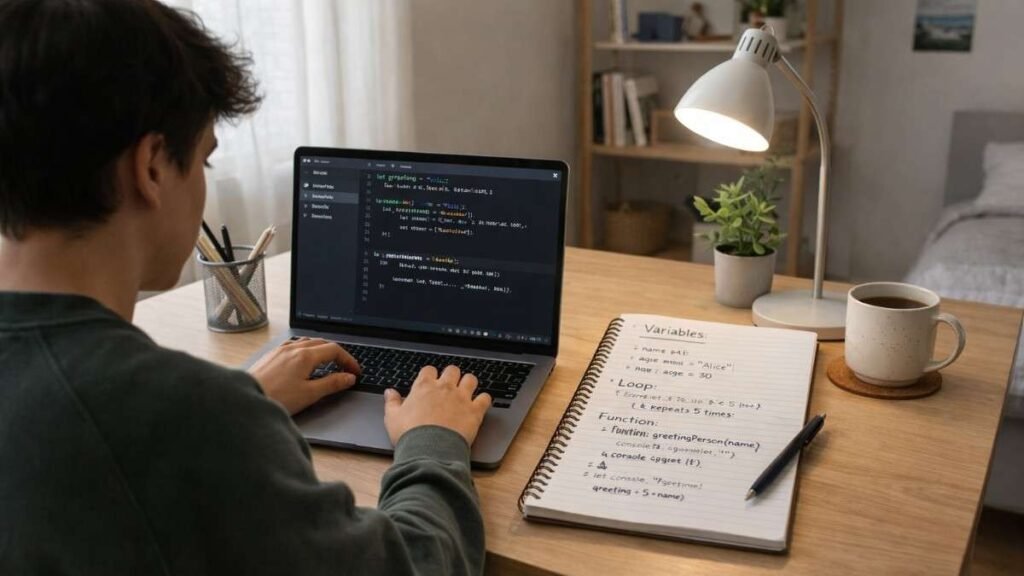
I still remember opening my laptop, typing my first line of code, and thinking I had just entered a completely different universe. Nothing made sense at first. But once I started understanding basic coding concepts, things slowly clicked, and I realized coding is not magic. It is just a set of logical steps anyone can learn with practice.
How coding really works
Coding is simply the process of giving a computer clear instructions to perform a task. Whether you are building a website, an app, or even a simple calculator, everything runs on instructions written in a programming language.
What surprised me most is that even though there are hundreds of programming languages, they all rely on the same core ideas. Once you understand these shared foundations, you can move between languages much more easily without starting from scratch.
Begin With Variables And Data Types
Variables are like labeled containers where you store information. For example, you can store a user’s name, age, or score in a variable and reuse it later in your program.
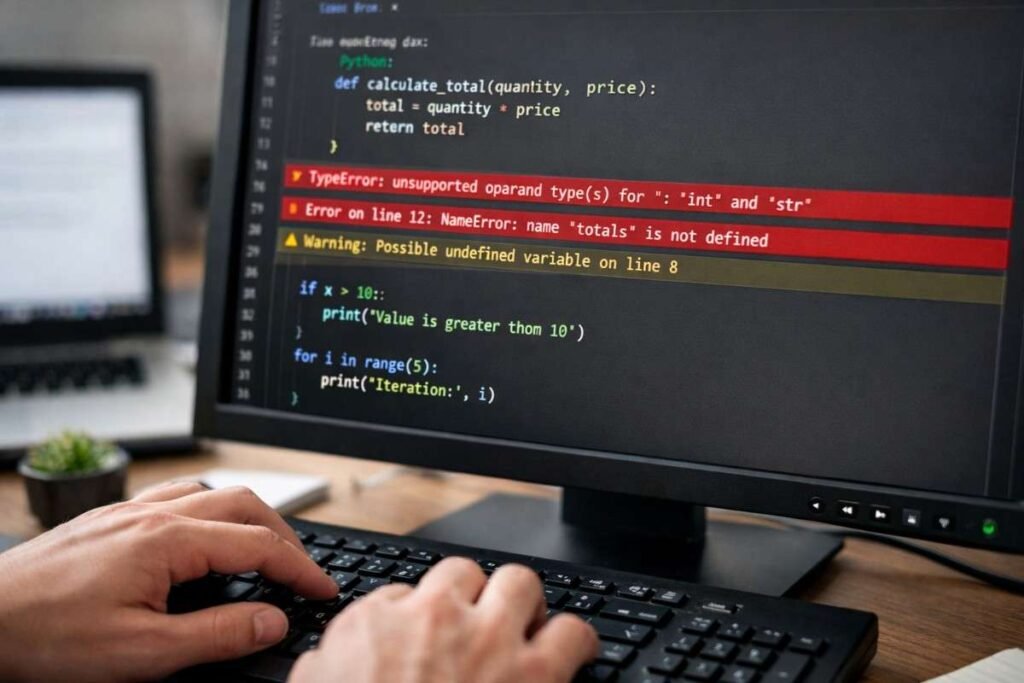
Data types define what kind of information is stored. A number behaves differently than text, and a true or false value behaves differently than both. Understanding this helps you avoid errors and write more reliable code.
When I first understood variables and data types, coding started to feel less confusing. It felt like organizing things into boxes instead of dealing with random chaos.
Includes control structures and logic flow
Control structures decide how your program flows from one step to another. They allow your code to make decisions and repeat actions when needed.
Conditionals help your program choose what to do. For example, if a user enters the correct password, they can log in. If not, access is denied. This simple logic powers most applications you use daily.
Loops allow repetition. Instead of writing the same instruction multiple times, you can tell your program to repeat a task until a condition is met. This makes your code efficient and saves time.
Rely On Functions And Reusable Code
Functions are reusable blocks of code designed to perform a specific task. You write them once and use them whenever needed.
When I started using functions, my code became much cleaner and easier to manage. Instead of repeating the same logic, I could organize my work into small, reusable sections.
Functions also make debugging easier. If something breaks, you can quickly locate the issue within a specific function instead of searching through the entire program.
Organize Data Using Structures
Data structures help you store and manage large amounts of data efficiently. Without them, handling complex programs would be difficult.
Arrays allow you to store multiple values in a list format. Objects help you group related information together, like user details or product data.
Learning data structures helped me think more clearly about how information is organized in programs. It also made it easier to build real-world applications.
Include Syntax And Programming Tools
Every programming language has its own syntax, which is the set of rules that define how code must be written. Even a small mistake like a missing bracket can break your program.
To make coding easier, developers use tools like IDEs. Programs such as Visual Studio Code help by highlighting errors, suggesting code, and improving productivity.
Once I started using the right tools, coding became faster and less frustrating. It felt like having a guide that helps you avoid common mistakes.
Involves Debugging And Problem Solving
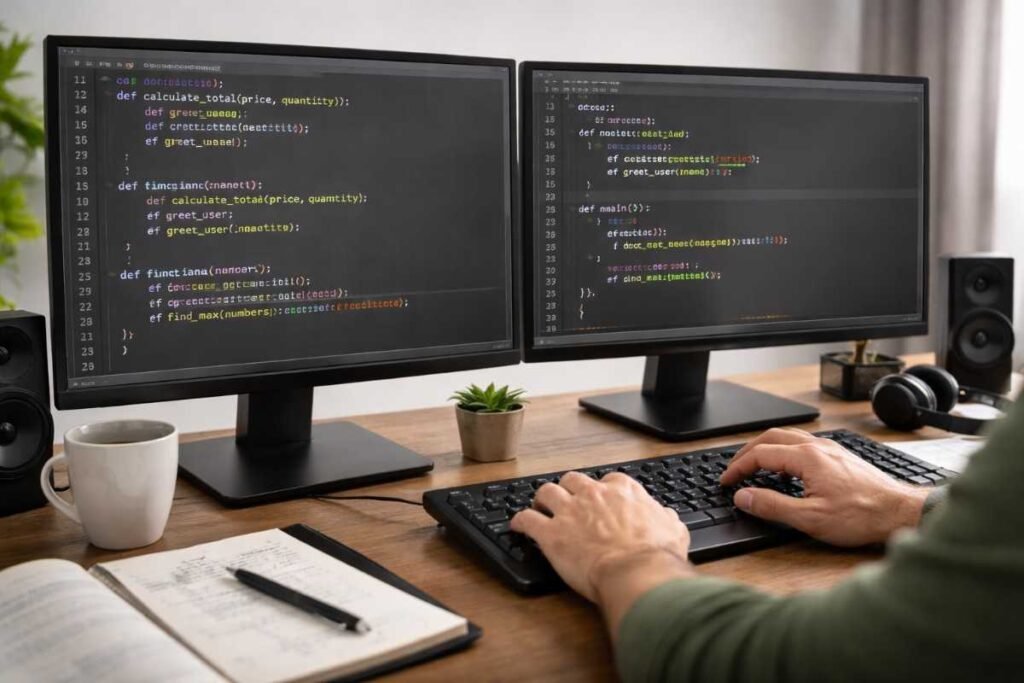
Debugging is the process of finding and fixing errors in your code. It is one of the most important skills you will develop as a beginner.
At first, errors can feel frustrating. But over time, I realized they are actually helpful. They show you what went wrong and guide you toward better solutions.
Problem solving is at the heart of coding. You break down a big problem into smaller steps and solve them one by one using logic and code.
Use algorithms to solve tasks
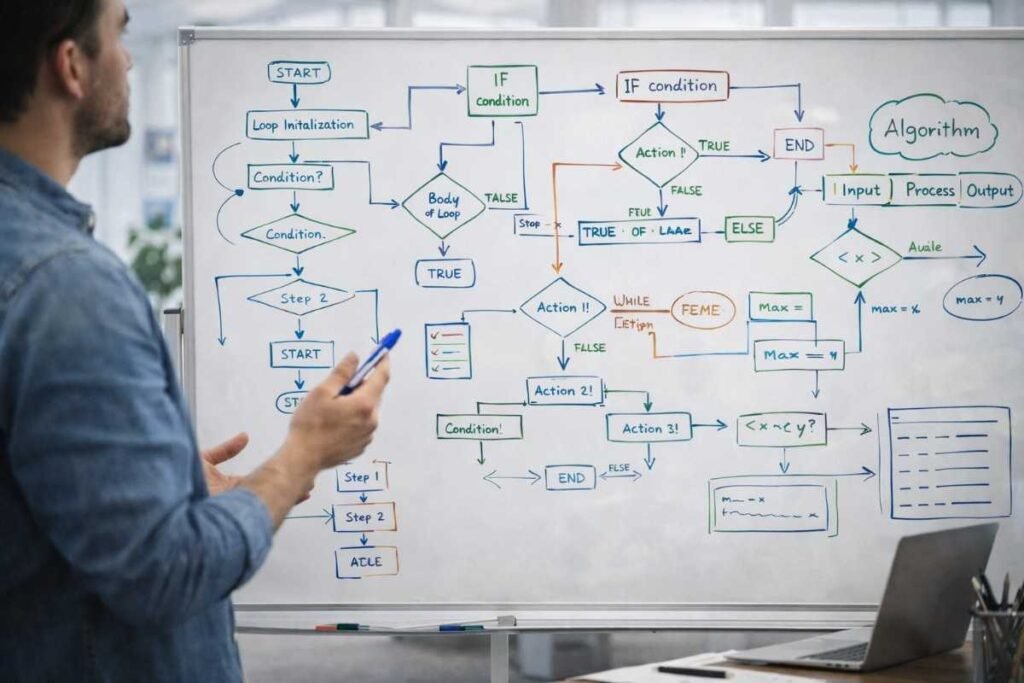
An algorithm is a step by step method to solve a problem. It is like a recipe that guides your program from start to finish.
For example, if you want to sort a list of numbers, you follow a specific sequence of steps. This sequence is your algorithm.
Understanding algorithms helped me think more logically. Instead of guessing solutions, I started planning my approach before writing code.
Connect with beginner friendly languages
If you are starting out, choosing the right language makes a big difference. Python and JavaScript are popular because they are easy to read and widely used.
Python is great for beginners because its syntax is simple and clean. JavaScript is useful for web development and runs directly in browsers.
I personally started with Python, and it helped me build confidence quickly. Once you understand the basics, switching languages becomes much easier.
How To Learn Basic Coding Concepts Step By Step
When I began learning, I tried to learn everything at once, and it only slowed me down. What worked better was focusing on one concept at a time and practicing it consistently.
Start by understanding variables and data types. Spend time writing small programs that use these ideas. Then move on to conditionals and loops so you can control how your code behaves.
Next, begin using functions to organize your code. Build small projects like a calculator or a simple game. Finally, review your work regularly and improve it. Repetition helps these concepts stick.
Common Mistakes While Learning Basic Coding
One mistake I made early on was relying too much on tutorials without practicing. Watching others code does not build real skills unless you apply what you learn.
Another mistake is trying to skip the basics. Many beginners jump into advanced topics without understanding core concepts, which leads to confusion later.
Fear of errors is also common. Making mistakes is part of the process. Every error teaches you something valuable and helps you improve faster.
Why Basic Coding Concepts Make Learning Faster
Once you understand the fundamentals, everything else becomes easier. You start recognizing patterns and solving problems more efficiently.
Learning new programming languages becomes less intimidating because the underlying logic remains the same. You only need to adjust to new syntax.
Strong basics also give you confidence. Instead of feeling lost, you begin to understand how things work and how to fix problems when they arise.
Frequently Asked Questions
1. What are basic coding concepts in simple terms?
They are the core ideas like variables, loops, and functions that help you write and understand programs.
2. How long does it take to learn basic coding concepts?
Most beginners understand them in a few weeks with consistent daily practice.
3. Do I need a computer science degree to learn coding?
No. Many developers learn coding through online resources and practice.
4. Which language should I start with for coding basics?
Python or JavaScript are great starting points because they are beginner friendly and widely used.
Conclusion
Learning basic coding concepts changed how I think about problems and solutions. What once felt confusing now feels logical and even enjoyable. If you stay consistent, practice regularly, and focus on the fundamentals, you will see real progress. Start small, stay curious, and trust the process because coding becomes easier with every step you take.