

AI is everywhere now. Students use it for assignments, professionals use it for emails and reports, and companies use it for automation and data analysis. What started as a tech tool has quickly become part of daily work and learning. The real question is not whether AI is useful anymore, but whether AI is safe to use.
The answer is not simply yes or no. AI can be safe, but only if people use it carefully and understand the risks. Most problems people blame on AI are actually caused by how people use it, what data they share, and how much they rely on it without thinking. AI is powerful, but it still needs human judgment.
Why People Are Concerned About AI Safety
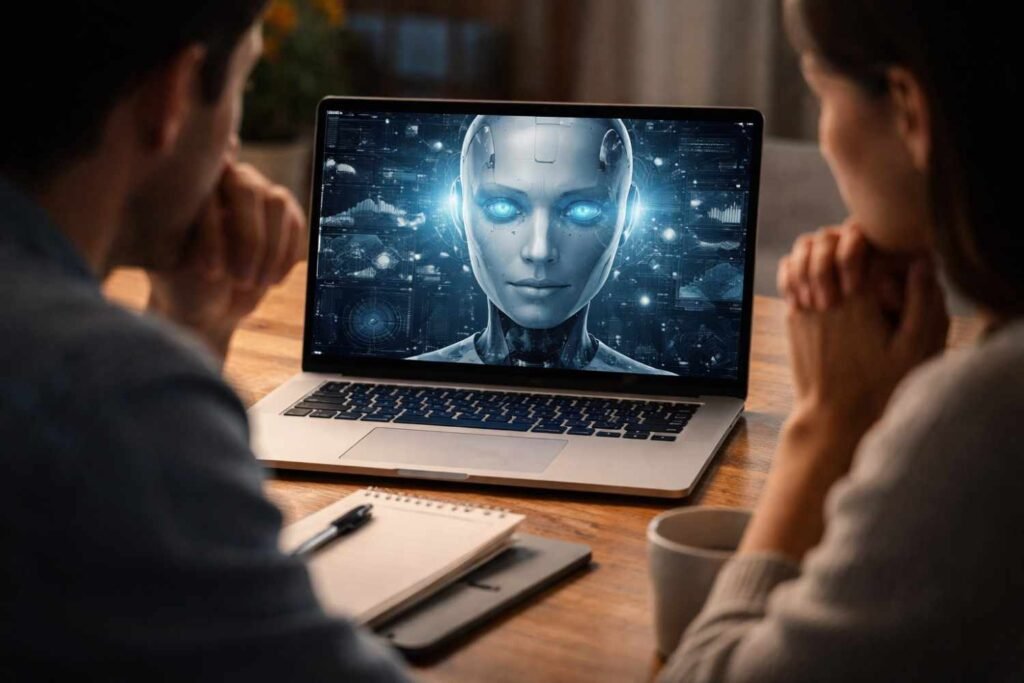
The biggest concerns around AI safety are data privacy, misinformation, and over-reliance on automation. AI tools often collect data, learn from user inputs, and generate responses based on patterns, not real understanding. This creates risks, especially when people use AI for important decisions, academic work, or company data.
Another issue is that AI sometimes produces incorrect information confidently. Many professionals and students copy AI outputs without verifying them, which can lead to mistakes, misinformation, or poor decision-making. So the real risk is not AI itself, but blind trust in AI.
AI Safety for Students

For students, AI can be an incredible learning tool when used correctly. It can explain complex topics, help with research, summarize notes, and provide practice questions. Many students use AI tools for writing assistance, coding help, and study planning.
However, there are also risks that students often ignore. One major issue is academic integrity. If students rely too much on AI to write assignments or solve problems, they may stop learning how to think, analyze, and write on their own. Over time, this can affect real skills and confidence.
Another concern is data privacy. Many educational AI tools collect learning behavior, writing samples, and academic information. If students share personal data, login credentials, or private academic records, it could create privacy risks.
So, for students, AI is safe to use when it is used as a learning assistant, not as a shortcut to avoid learning.
AI Safety for Professionals
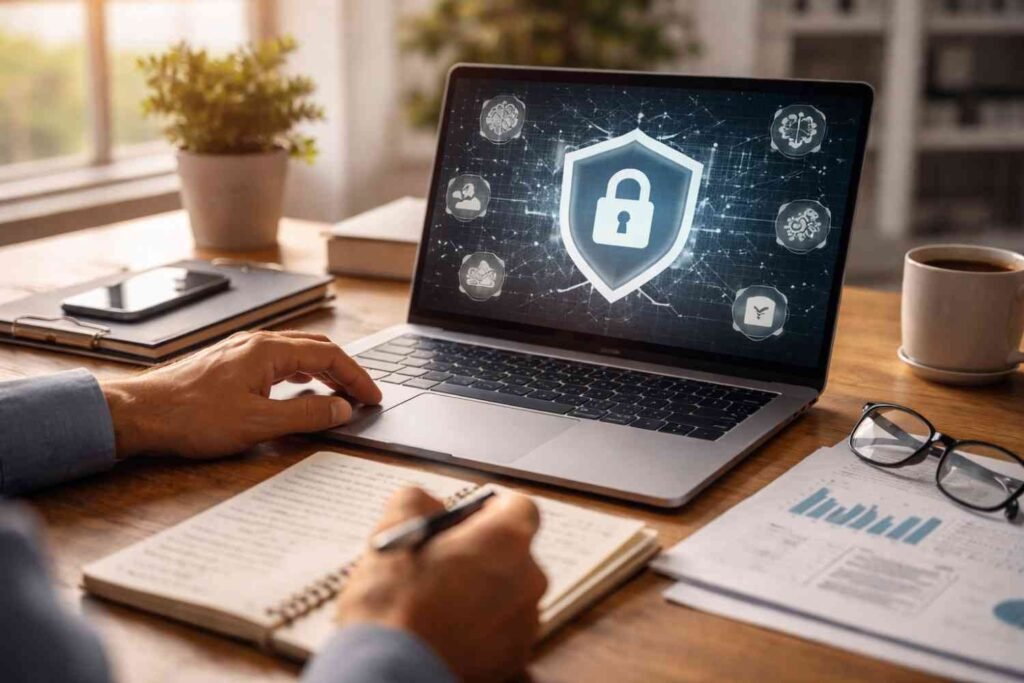
Professionals use AI mostly for productivity. It helps write emails, create reports, analyze data, generate ideas, automate repetitive tasks, and improve workplace productivity. AI has become one of the most common digital tools in modern workplaces.
But this is also where one of the biggest risks appears: data leakage. Many professionals copy company documents, client information, financial data, or internal reports into AI tools without realizing that this data should not be shared. This can create serious artificial intelligence security and privacy risks.
Another issue is skill erosion. If professionals rely on AI to write everything, analyze everything, and make decisions, they may slowly lose critical thinking and problem-solving skills. AI should assist work, not replace thinking.
AI is safe for professionals when used for:
- Drafting and brainstorming
- Summarizing information
- Automating repetitive tasks
- Data organization
- Idea generation
It becomes risky when used for confidential data, legal decisions, financial decisions, or strategic planning without human review.
AI Safety for Companies
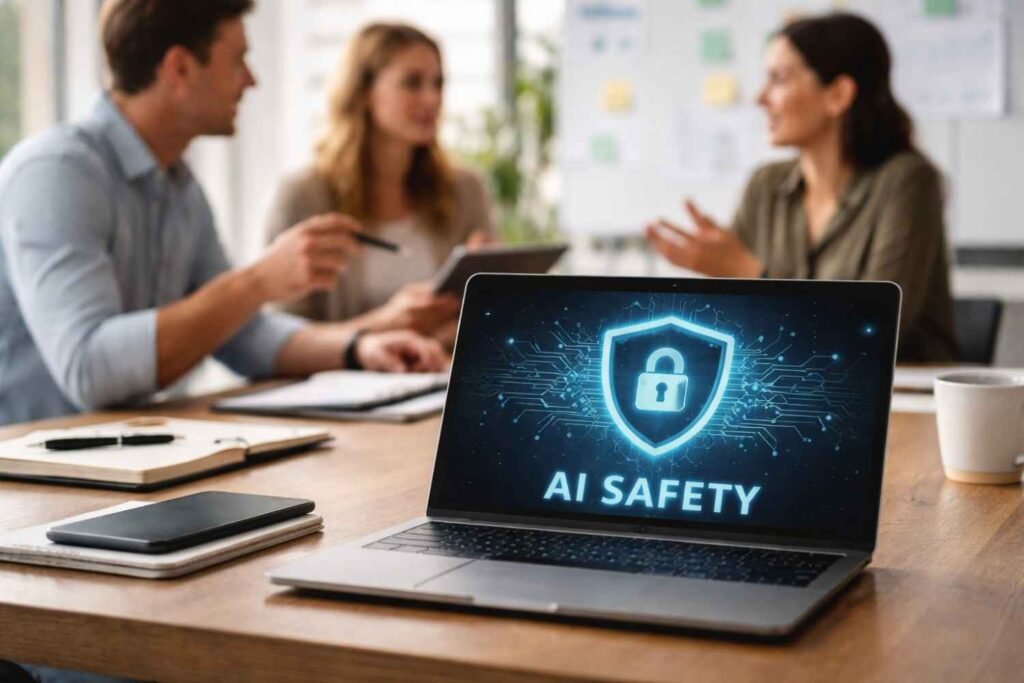
Companies benefit from AI the most because it improves efficiency, automation, cybersecurity detection, and data analysis. Many businesses use AI for customer service, marketing automation, fraud detection, hiring processes, and predictive analytics.
However, companies also face the biggest risks. One growing problem is something called “shadow AI,” where employees use AI tools without company approval. This can expose internal documents, client information, or proprietary data to external systems.
Companies also need to worry about cybersecurity, compliance laws, and AI decision-making bias. If generative AI systems are trained on biased data, they may produce biased hiring decisions, financial predictions, or customer targeting strategies.
For companies, AI is not just a tool. It is a strategic asset that must be managed carefully with security policies, employee training, and human oversight.
Common Mistakes People Make When Using AI
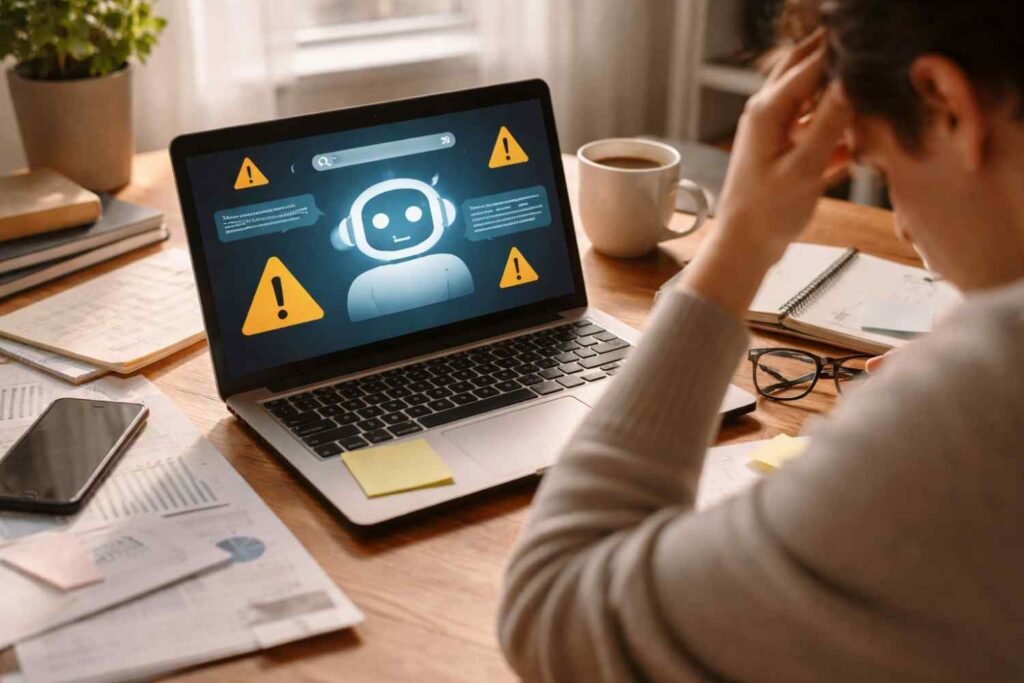
Many AI risks come from simple mistakes people make while using AI tools.
Some common mistakes include:
- Sharing confidential or personal data
- Copying AI content without verifying accuracy
- Using AI to make important decisions without review
- Relying on AI instead of learning skills
- Using AI tools without understanding privacy policies
- Assuming AI is always correct
- Using AI for academic work dishonestly
Avoiding these mistakes already makes AI much safer to use.
FAQs: Is AI Safe to Use for Students, Professionals, and Companies?
1. Is AI safe to use for students?
Yes, AI is safe for students when used for learning, research, and practice. It becomes unsafe when used for cheating, sharing personal data, or relying on it without learning concepts.
2. Is AI safe to use for work and professional tasks?
AI is generally safe for productivity tasks like writing, summarizing, and brainstorming. It should not be used to share confidential information or make important business decisions without review.
3. What are the biggest risks of artificial intelligence?
The biggest risks include data privacy issues, incorrect information, algorithm bias, over-reliance on automation, and cybersecurity threats.
4. How can companies use AI safely?
Companies can use AI safely by creating AI policies, training employees, protecting data, using secure AI platforms, and keeping human oversight for important decisions.
Final Thoughts
AI is neither completely safe nor completely dangerous. It is simply a tool, and like any tool, its safety depends on how people use it. Students can use it to learn faster, professionals can use it to work smarter, and companies can use it to grow faster. But problems start when people trust AI blindly, share sensitive data, or rely on it without thinking. The real risk is not artificial intelligence itself, but human over-reliance and lack of awareness.
The future will not be humans vs AI. It will be humans who understand AI vs humans who don’t. The safest way to use AI is to treat it as a helper, not a replacement for thinking.