
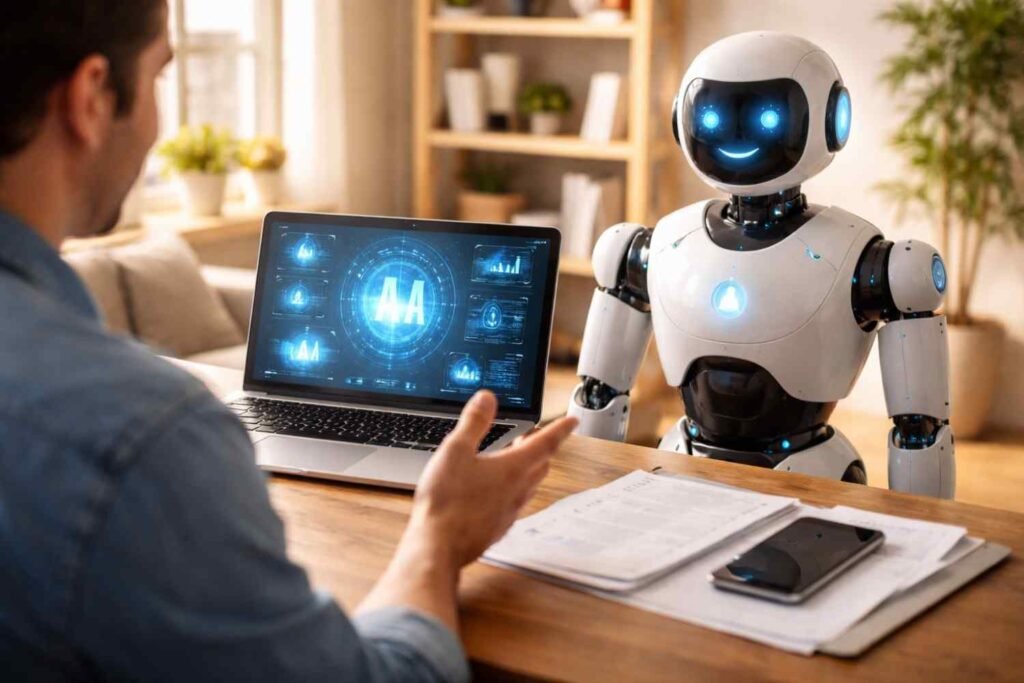
A few years ago, most people thought artificial intelligence was just chatbots answering customer service questions or recommending movies. Now AI writes emails, creates images, analyzes data, helps students learn, and even assists doctors in detecting diseases. The shift happened faster than most people expected, and many people still don’t fully realize how much AI is already part of daily life.
What’s interesting is that the future of AI technology isn’t really about robots taking over the world. It’s more about AI quietly becoming part of everything, work, education, healthcare, business, and everyday decisions. The biggest changes will not always be dramatic. Instead, AI will slowly become something people use every day without even thinking about it.
Why Everyone Is Talking About The Future Of AI Technology

The biggest reason AI is getting so much attention is that it is moving from being just a tool to becoming something more like a partner. Earlier software needed instructions for everything, but newer AI systems can analyze information, make suggestions, and even complete tasks on their own.
In the coming years, AI technology trends will focus on systems that can reason, plan, and complete multi-step tasks. Instead of asking AI one question at a time, people will give AI a goal, and it will figure out the steps to complete it. This shift alone will change how businesses operate, how people work, and how decisions are made.
Another major change is multimodal AI. This means AI will not just understand text, but also images, voice, video, and even emotions through facial expressions and tone of voice. This will make AI interaction feel much more natural and human-like.
How AI Will Change Jobs And Work
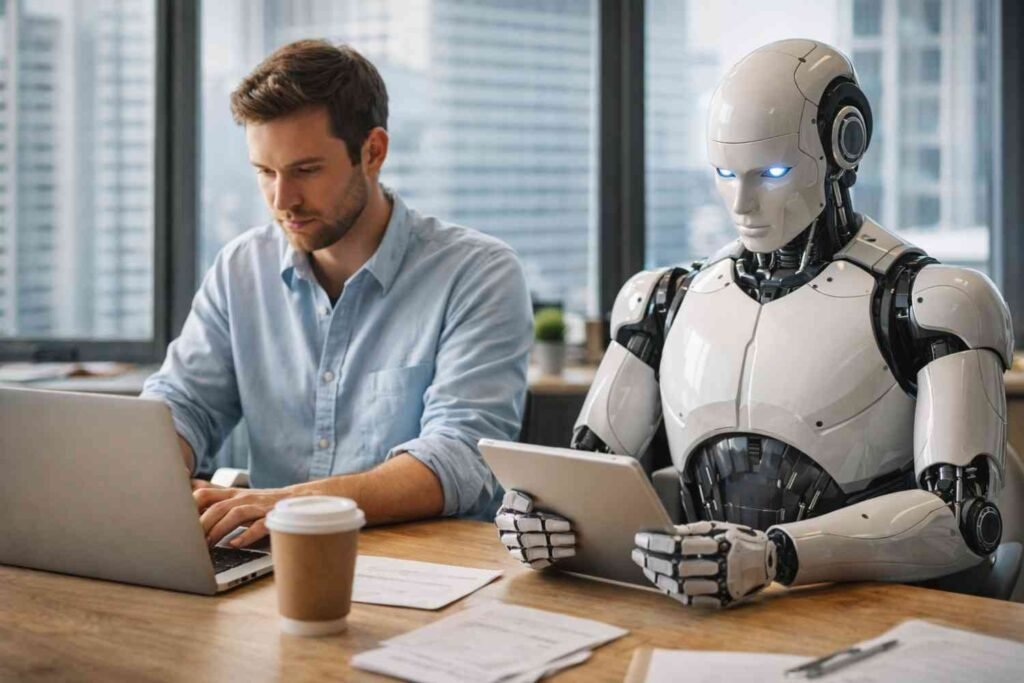
One of the biggest discussions around the future of artificial intelligence is jobs. Many people worry that AI will replace jobs, but the reality is more complicated. AI will replace some tasks, not entire professions. At the same time, it will create new roles that didn’t exist before.
Jobs that involve repetitive tasks, data entry, basic analysis, or routine customer support are more likely to be automated. However, jobs that involve creativity, decision-making, leadership, strategy, and human interaction will grow.
Jobs That May Grow In The AI Future
- AI specialists and machine learning engineers
- Data analysts and AI strategy consultants
- Cybersecurity professionals
- Healthcare technology specialists
- AI ethics and compliance roles
- Automation managers and workflow designers
The impact of AI on jobs will be more about working with AI rather than competing against it. People who learn how to use AI tools will likely be more productive and valuable in the workplace.
AI In Everyday Life

Many people think AI is something futuristic, but AI is already part of daily life. Recommendation systems, navigation apps, voice assistants, fraud detection, and smart devices already use artificial intelligence.
In the future, AI and daily life will become even more connected. Smart homes will manage energy usage automatically. Healthcare apps will monitor health and detect problems early. Personal AI assistants may manage schedules, finances, travel planning, and even learning plans.
AI will slowly become what some experts call “invisible infrastructure.” It will run in the background, managing systems like traffic, logistics, energy usage, and digital services without people noticing.
AI In Business And Productivity
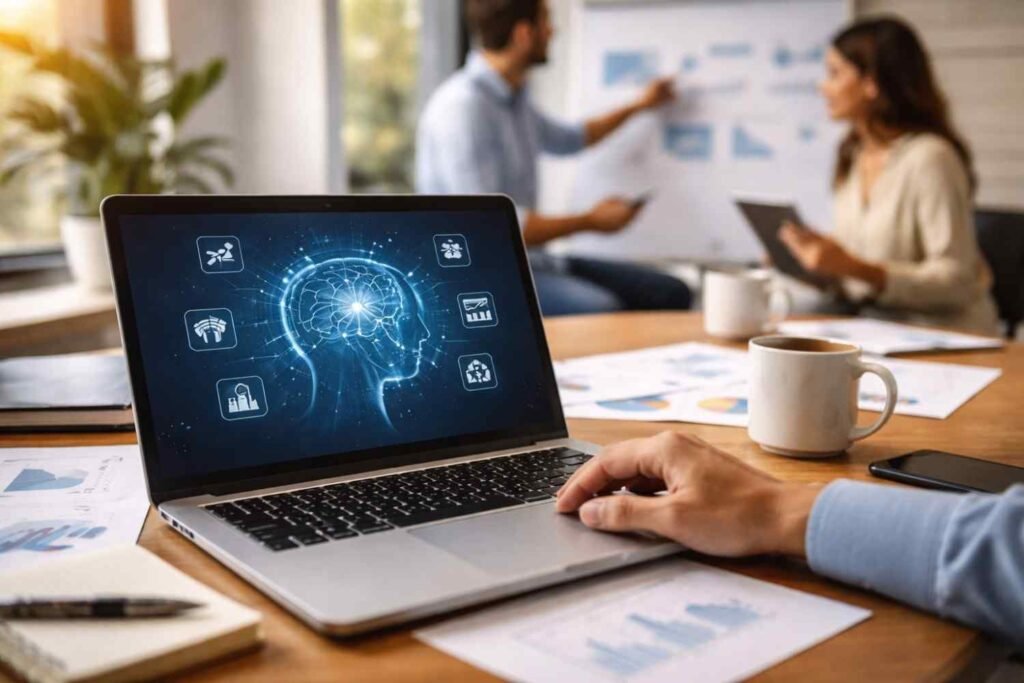
Businesses are already using AI for automation, customer service, marketing, data analysis, and decision-making. In the next 10 years, AI in business will likely become a strategic partner rather than just a productivity tool.
Companies will use AI to:
- Predict customer behavior
- Optimize pricing and inventory
- Automate workflows
- Detect fraud and security risks
- Improve hiring decisions
- Analyze large amounts of data quickly
AI productivity tools will change how teams work. Instead of spending hours on reports, research, or data analysis, employees will focus more on strategy, creativity, and decision-making.
This is why many experts believe the AI automation future will not reduce work but will change the type of work people do.
Skills People Should Learn For The AI Future

As AI technology becomes more common, the most valuable skills will not just be technical skills. Many non-technical skills will become more important because AI will handle repetitive and analytical tasks.
Important Skills For The AI Future
- Critical thinking
- Problem solving
- Communication
- Creativity
- Data literacy
- Understanding AI tools
- Adaptability and continuous learning
People who can combine human skills with generative AI tools will have a big advantage in the future job market.
What The Next 10 Years May Look Like
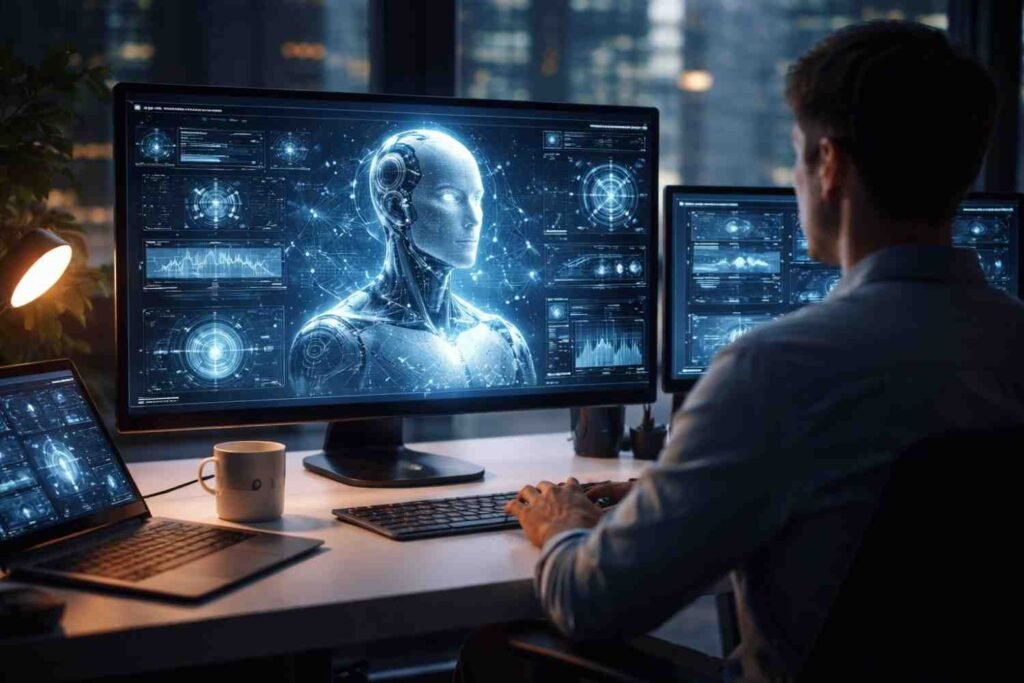
If we look at AI future predictions, the next decade will likely include major changes but not science-fiction scenarios. AI will not replace humans, but it will change how humans work and live.
In the next 10 years, we will likely see:
- AI assistants managing daily tasks
- More automation in offices and businesses
- AI in healthcare, detecting diseases earlier
- Personalized learning systems in education
- Smarter transportation and logistics systems
- More collaboration between humans and AI systems
- New careers related to AI management and ethics
The future of AI technology will mostly be about human and AI collaboration, not replacement.
FAQs: The Future Of AI Technology: What We Should Actually Expect
1. What Is The Future Of AI Technology In The Next 10 Years?
AI will likely become part of daily life, business operations, healthcare, education, and automation systems. Most people will use AI tools regularly for work and personal tasks.
2. Will AI Replace Most Jobs?
AI will replace some repetitive tasks, but it will also create new jobs. Most future jobs will involve working with AI rather than being replaced by it.
3. What Skills Are Needed For The AI Future?
Important skills include critical thinking, communication, creativity, problem-solving, data literacy, and understanding how to use AI tools.
4. Is AI Dangerous For Society?
AI has risks such as bias, privacy concerns, and misinformation, but with proper regulations and responsible development, AI can be very beneficial.
Final Thoughts
The future of AI technology is not about robots taking over jobs or machines controlling everything. It is more about AI slowly becoming part of everyday systems, workplaces, and decision-making processes. The biggest change will be how people work, learn, and solve problems with the help of AI. People who adapt, learn new skills, and understand how to work with AI will benefit the most from these changes.
AI is not really replacing humans. It is changing what humans focus on.