
Artificial intelligence started as something exciting. It made work faster, writing easier, research quicker, and decision-making more data-driven. At first, it felt like a powerful assistant that could remove boring tasks and help people focus on important work. But as AI became part of everyday life, new problems started appearing that people didn’t expect.
Most people talk about robots replacing jobs or machines taking over the world, but the real problems with artificial intelligence are much quieter and much more structural. They affect how people think, how businesses operate, how technology is built, and even how humans interact with each other. These problems are not always visible immediately, but they are already shaping society in ways many people don’t realize.
Skill Erosion and the Cognitive Crutch Problem

One of the biggest problems with artificial intelligence is that it is slowly becoming a thinking replacement instead of a thinking assistant. People are starting to rely on AI to write emails, summarize documents, generate ideas, solve problems, and even make decisions. While this saves time, it also reduces the need to think deeply.
Over time, this creates a divide between people who use AI to improve their thinking and people who use AI to avoid thinking. Some professionals are becoming more productive and strategic, while others are becoming dependent on AI for even simple tasks.
This is already visible in workplaces and education environments where people struggle to complete tasks without AI assistance. When tools do most of the thinking, critical thinking, problem-solving, and creativity can slowly weaken. This is one of the less discussed artificial intelligence risks, but it could have long-term effects on skills and expertise.
Environmental Impact of Artificial Intelligence
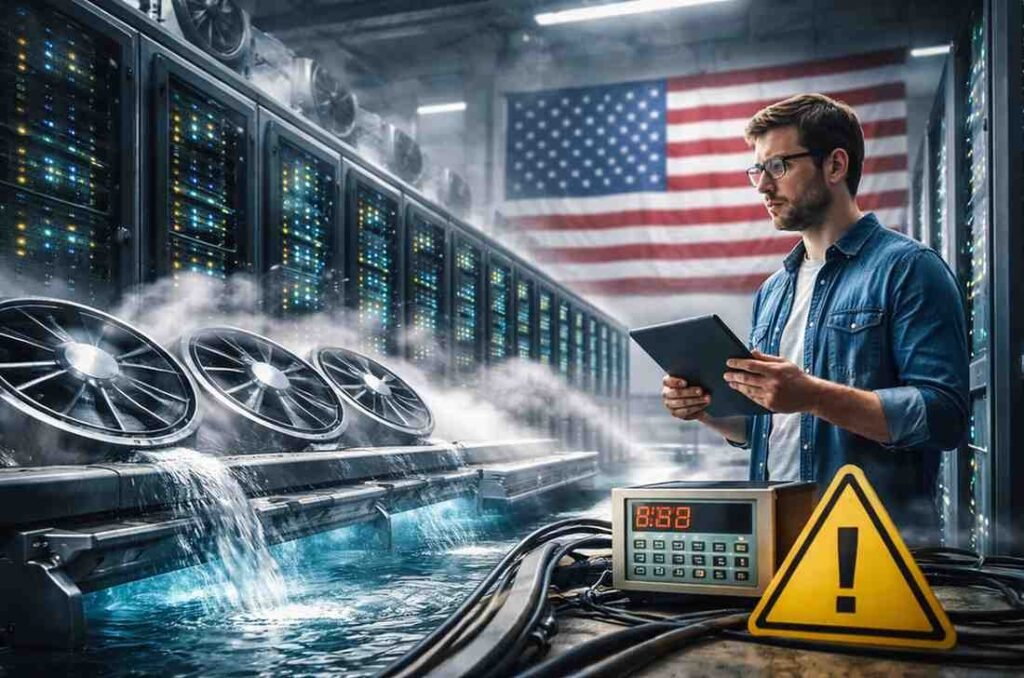
AI is often seen as digital and invisible, but it actually has a large physical footprint. Training and running AI models require massive data centers that consume electricity, water, and hardware resources.
Some of the environmental concerns related to AI include:
- High electricity consumption from data centers
- Large water usage for cooling servers
- Increased electronic waste from outdated hardware
- Local power grid pressure and higher energy costs
- Pollution from energy production
This is one of the negative effects of artificial intelligence that many people do not consider. As AI usage grows, the infrastructure needed to support it also grows, which increases environmental pressure and resource consumption.
The Rise of Synthetic Work and Fake Productivity
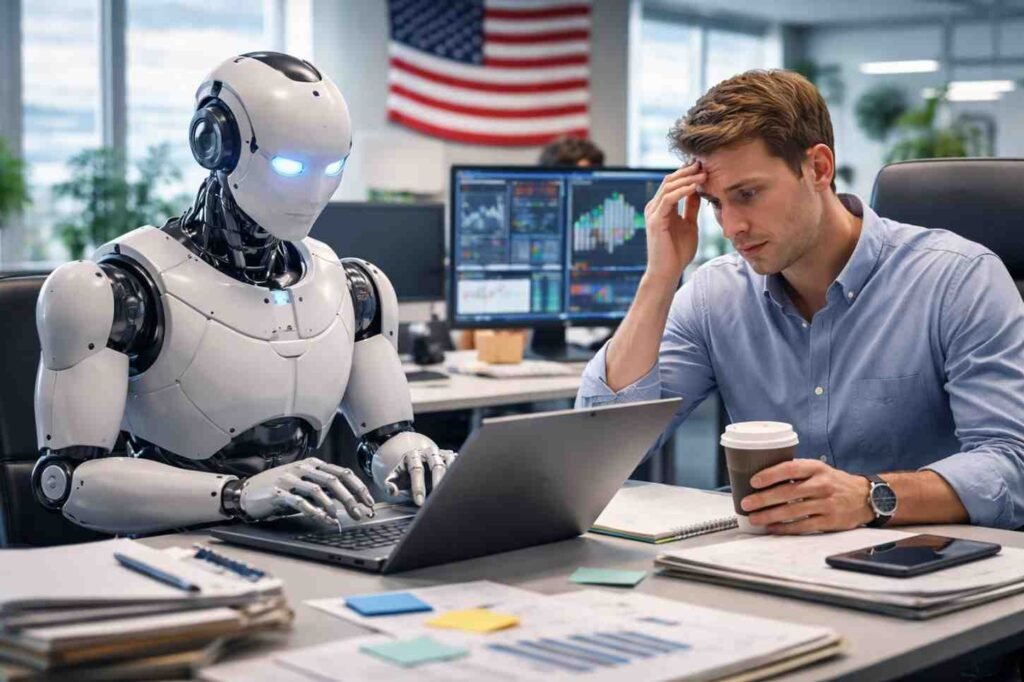
Another one of the major problems with artificial intelligence is what some experts call synthetic productivity. AI can generate business plans, marketing content, websites, code, and presentations instantly. This creates the illusion of productivity and progress even when there is no real strategy or substance behind the work.
Some startups and online businesses now look fully developed within days because AI can generate everything quickly. But when real problems appear, many of these businesses collapse because the foundation was never strong.
This also applies to software development. Some developers rely heavily on AI to write code without fully understanding it. This can introduce hidden security risks, poor architecture decisions, and long-term maintenance problems. AI can scale productivity, but it can also scale bad decisions.
Psychological Effects and the Authenticity Problem
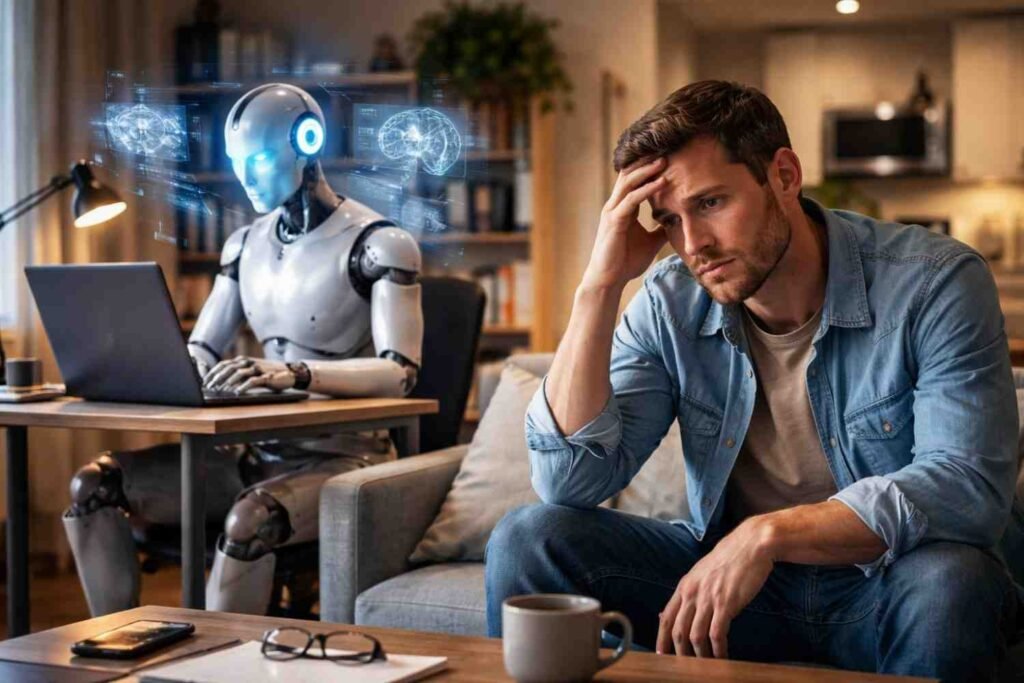
Artificial intelligence is also changing how people interact with information and with each other. AI responses are fast, polite, structured, and personalized. Human conversations are messy, emotional, unpredictable, and sometimes uncomfortable. Over time, some people may start preferring AI interaction over human interaction.
This creates several AI problems in society:
- Reduced human interaction
- People are trusting AI answers without verification
- Personalized AI creating echo chambers
- Difficulty distinguishing real vs AI content
- Emotional dependence on AI tools
There is also a growing misinformation problem. AI improves daily tasks and can generate realistic images, videos, and voices, making deepfakes and misinformation easier to create. This creates trust issues where people may stop believing what they see online.
Bias, Privacy, and Decision-Making Risks
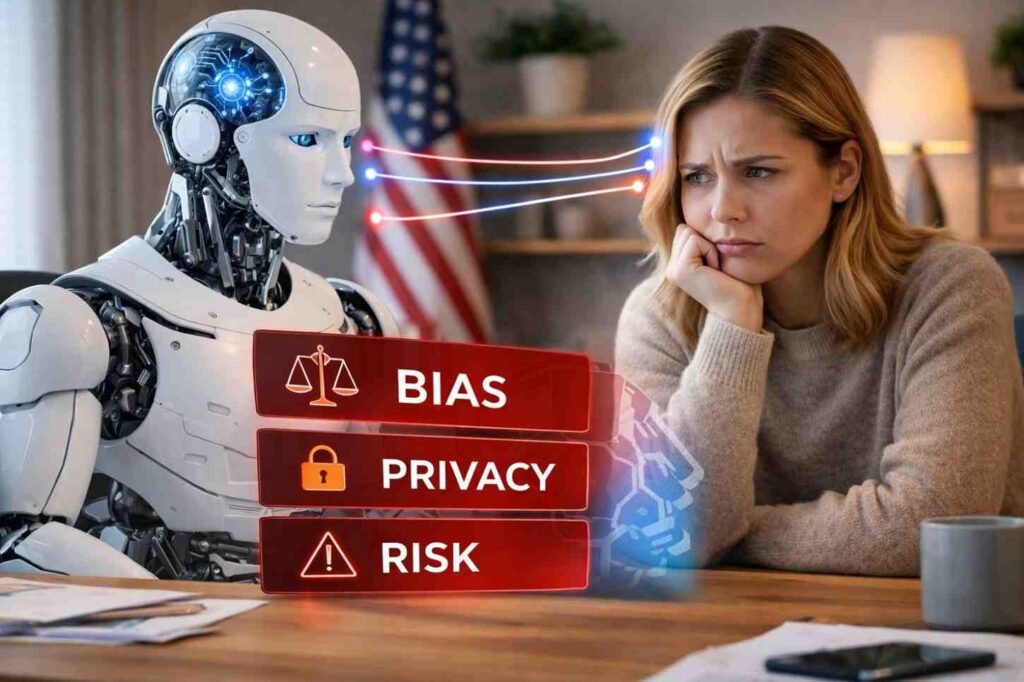
Many people assume AI is neutral, but AI systems are trained on human data, and human data contains bias. This leads to algorithm bias in hiring tools, loan approval systems, facial recognition, and predictive systems.
Some of the major AI ethical issues include:
- Biased hiring algorithms
- Biased loan approval systems
- Privacy violations from data collection
- Surveillance and tracking concerns
- AI is making incorrect decisions
- Lack of transparency in AI decisions
This is often called the black box problem, where AI makes decisions but cannot clearly explain how it reached that decision. This becomes a serious problem in areas like healthcare, finance, and law, where decisions affect people’s lives.
FAQs: The Real Problems With Artificial Intelligence No One Talks About
1. What are the biggest problems with artificial intelligence today?
The biggest problems include job displacement, AI bias, privacy concerns, misinformation, overdependence on AI, lack of transparency, and unclear legal responsibility when AI systems make mistakes.
2. How does artificial intelligence affect jobs?
Artificial intelligence automates repetitive tasks, which can reduce some jobs but also creates new roles. The main concern is job transformation and skill changes rather than complete job disappearance.
3. Why is AI bias a problem?
AI systems learn from historical data, and if that data contains bias, the AI system can make biased decisions in hiring, lending, law enforcement, and other areas.
4. Can artificial intelligence be dangerous in the future?
AI can be risky if it is poorly regulated, biased, misused for misinformation, or if humans become too dependent on it for decision-making and critical thinking.
Final Thoughts
Artificial intelligence is not just a technological shift; it is a societal shift. The real problems with artificial intelligence are not robots taking over the world but humans slowly changing how they think, work, communicate, and make decisions. Skill erosion, environmental impact, synthetic productivity, psychological effects, bias, and accountability issues are all structural problems that will shape the future of AI more than science fiction scenarios ever will.
AI will continue to grow and become part of everyday life, but the real challenge is not building smarter machines. The real challenge is making sure humans do not become less capable, less independent, and less responsible while using them.