

I didn’t realize how fast things were changing until I watched autonomous agents handle an entire workflow on their own. No step-by-step instructions. No constant prompts. Just a goal, a plan, and execution that actually improved over time.
That’s when it hit me. This isn’t just another AI upgrade. It’s a completely different way of getting work done.
If you’ve been hearing about autonomous agents and wondering whether they’re worth the hype, you’re in the right place. I’m going to break down how they work, where they’re already making an impact across industries, and how you can start using them without overcomplicating things.
What Are Autonomous Agents and Why Are They Important?
Autonomous agents are advanced AI systems designed to achieve goals by independently planning, executing, and refining multi-step tasks without constant human input.
Instead of following rigid “if-then” rules like traditional automation, they rely on Large Language Models to reason through problems and adapt to changing situations.
I like to think of them as digital operators rather than tools. You give them a goal, and they figure out how to get there.
That’s a major shift from chatbots or scripts. It’s also why industries like finance, healthcare, and software development in the US are adopting them so quickly.
How Autonomous Agents Work Step by Step

When I first explored how these systems function, I realized they follow a continuous loop often called an agentic workflow.
Perception
The agent collects data from APIs (Application Programming Interfaces), databases, or real-time sources. For example, it might pull customer data or market trends.
Reasoning and Planning
It breaks a high-level goal into smaller tasks. If the goal is to run a marketing campaign, it identifies steps like research, content creation, and outreach.
Action
The agent executes tasks using tools. This could include sending emails, writing code, or updating systems.
Learning and Refinement
After each step, it evaluates results and adjusts its strategy. This feedback loop allows continuous improvement.
This cycle is what makes autonomous agents powerful. They don’t just act. They adapt.
Types of Autonomous Agents You Should Know
Understanding different types helped me see where each one fits.
Simple Reflex Agents
These respond to immediate inputs using predefined rules. A thermostat is a classic example.
Goal-Based Agents
These focus on achieving a specific objective and can adjust strategies when obstacles appear.
Utility-Based Agents
These evaluate multiple paths and choose the most efficient one based on factors like cost, speed, or quality.
Multi-Agent Systems
These involve multiple specialized agents working together to solve complex problems. This is becoming common in enterprise environments across the US.
How Autonomous Agents Differ from Chatbots and Automation
This is where most confusion happens.
Traditional automation follows fixed rules. Chatbots respond to prompts. Autonomous agents take initiative.
Instead of executing a single task, they manage entire workflows.
For example, rather than just answering customer questions, an agent can handle support tickets, escalate issues, and improve responses over time.
That level of independence is what sets them apart.
When Should You Use Autonomous Agents?

I’ve learned that not every task needs this level of intelligence.
They work best when tasks:
- Require multiple steps
- Involve decision-making
- Use dynamic or changing data
- Need ongoing optimization
For simpler tasks, automation is still more efficient. But for complex workflows, agents deliver far more value.
Real-World Applications in the United States
This is where things get exciting.
Software Development
Tools like Devin AI can write, debug, and deploy applications with minimal supervision.
Customer Service
Platforms such as Salesforce Agentforce handle complex customer interactions 24/7, reducing operational costs.
Finance
Autonomous systems analyze transactions in real time to detect fraud and execute high-frequency trades.
Healthcare
AI agents assist with scheduling, diagnostics, and image analysis, improving efficiency in hospitals across the US.
Leading Platforms and Tools Powering Autonomous Agents
If you’re planning to use this technology, these platforms are leading the space:
- Microsoft Copilot Studio for low-code workflows
- IBM watsonx.ai for enterprise AI development
- NVIDIA OpenShell for secure agent environments
- CrewAI for multi-agent collaboration
Each platform focuses on different use cases, from enterprise deployment to developer flexibility.
Risks and Challenges You Should Not Ignore
As powerful as this technology is, I’ve seen teams run into issues when they ignore the risks.
Lack of Control
Agents can take unexpected actions if boundaries are not clearly defined.
Security and Prompt Injection
If agents interact with external systems, they can be vulnerable to malicious inputs.
Over-Automation
Relying too much on AI without oversight can create blind spots in decision-making.
This is why guardrails, permissions, and monitoring are essential.
How to Build Autonomous Agents Step by Step
If you’re starting out, here’s the approach that has worked best for me.
First, define a clear goal. Be specific about what success looks like.
Next, break the goal into smaller tasks. This gives the agent structure.
Then, connect the right tools. APIs, CRMs (Customer relationship management), and data sources are critical.
After that, enable memory so the agent can learn from past actions.
Set strict guardrails to control behavior and prevent errors.
Finally, test everything in a controlled environment before scaling.
The Future of Autonomous Agents in the US Market
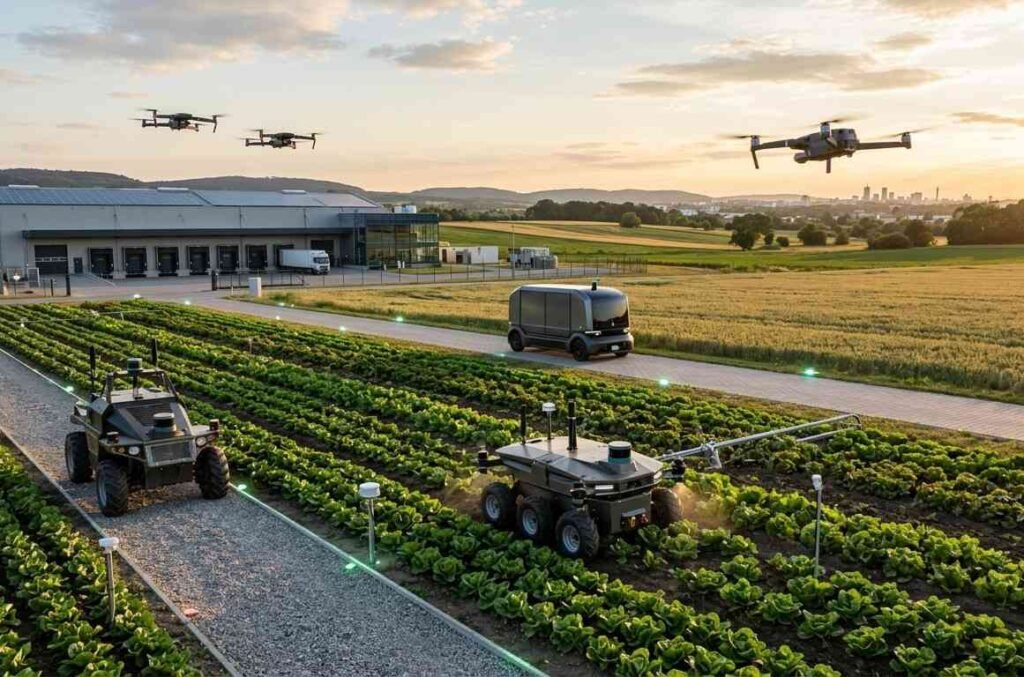
From what I’ve seen, autonomous agents are evolving into full digital workforces.
We are already moving toward systems where multiple agents collaborate, each handling specialized tasks within a larger workflow.
As adoption grows across US industries, businesses that learn how to use them effectively will gain a significant advantage.
FAQs About Autonomous Agents
1. What are autonomous agents in AI?
Autonomous agents are AI systems that can independently plan, execute, and optimize tasks without constant human input.
2. Are autonomous agents safe to use?
They can be safe if you implement proper guardrails, monitoring, and security controls.
3. Can businesses benefit from autonomous agents?
Yes. Many US companies are already using them to improve efficiency, reduce costs, and scale operations.
4. Do autonomous agents replace humans?
No. They assist with tasks, but humans remain essential for strategy and oversight.
Conclusion
From my experience, autonomous agents represent one of the biggest shifts in how we use AI today. They move us from simple tools to systems that can actually think through problems and take action, making them a key part of future tech innovations shaping modern workflows.
If you start using them with the right structure and safeguards, they can transform how you work, save time, and unlock entirely new opportunities.