A few years ago, smartphone upgrades mostly meant better cameras, faster processors, or slightly bigger screens. Now, most of the real changes are happening quietly in the background. Phones are learning how people use them, predicting what they need, improving photos automatically, and even managing battery and performance without users noticing. AI in smartphones is no longer a special feature; it is becoming the brain behind how modern phones work.
If you think about how people use their phones daily, taking photos, sending messages, navigating, using voice assistants, or unlocking their phones, artificial intelligence is involved in almost every one of those actions. Most people are already using AI features every day without realizing it. The shift is subtle, but it is changing how smartphones behave, respond, and adapt to users.
What AI in Smartphones Actually Means
AI in smartphones refers to machine learning and intelligent algorithms built into the phone’s system that learn from user behavior and improve performance, camera results, battery life, security, and personalization. Instead of users adjusting settings manually, the phone learns patterns and adjusts automatically.
Modern smartphones now include dedicated AI chips, often called neural processing units, that handle tasks like image processing, voice recognition, predictive text, and app suggestions. These systems run in the background and continuously learn from how the phone is used.
This is why phones now feel more personalized than they did a few years ago. They are not just tools anymore; they are adaptive systems that change based on usage patterns.
AI in Smartphone Cameras Changed Photography Completely
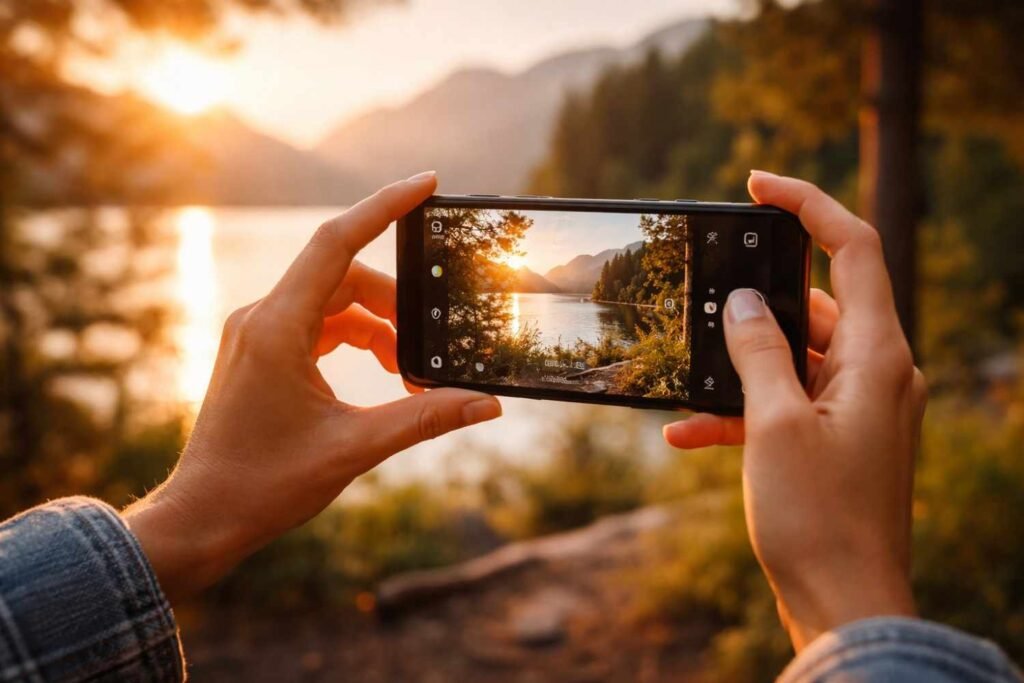
One of the biggest areas where AI in smartphones is visible is photography. Smartphone cameras are no longer just about megapixels or lens quality. AI now plays a major role in how photos are processed and improved.
When someone takes a photo, the phone is not just capturing an image. AI is important in analyzing the scene, lighting, motion, faces, and background in milliseconds and then processes the image to make it look better than what the camera sensor actually captured.
Some common AI camera features include:
- Scene detection and automatic adjustments
- Night mode image enhancement
- Portrait mode background blur
- AI photo editing and object removal
- Motion stabilization for video
- Real-time HDR processing
Many modern phones can even generate missing details, improve lighting, and sharpen images automatically. This is why smartphone photography has improved so quickly, even when camera hardware changes are small.
Voice Assistants Are Becoming AI Agents

Voice assistants used to be simple tools that responded to basic commands like setting alarms or checking the weather. Now they are becoming much more intelligent and capable of handling complex tasks.
AI voice assistants can now:
- Understand natural language better
- Perform multi-step tasks
- Control smart home devices
- Schedule meetings and reminders
- Send messages and emails
- Provide personalized suggestions
- Translate languages in real time
The biggest change is that many assistants now process voice commands directly on the phone instead of sending everything to cloud servers. This makes responses faster and improves privacy. Voice assistants are slowly turning into personal AI agents that help manage daily tasks.
On-Device AI Is Becoming More Important
One of the biggest trends in AI in smartphones is the shift toward on-device AI, also called edge AI. This means the phone processes AI tasks locally instead of relying entirely on cloud servers.
This change has several advantages. First, it improves privacy because personal data does not always need to be sent to external servers. Second, it makes AI features faster because the phone does not need internet connectivity for every task. Third, it allows features like offline voice recognition, real-time translation, and smart photo editing to work without a network connection.
However, on-device AI also requires more powerful hardware. Modern smartphones now need more RAM, more storage, and dedicated AI processors to handle these tasks efficiently.
AI Is Improving Smartphone Security

Security is another area where artificial intelligence in mobile phones is becoming important. Traditional security methods like PIN codes and passwords are now combined with AI-based systems.
Some AI security features include:
- Face recognition unlock
- Behavioral biometrics (how you type or swipe)
- App activity monitoring
- Fraud detection in banking apps
- Smart spam and scam call detection
Behavioral biometrics is especially interesting because the phone can recognize the user based on typing speed, touch pressure, and gesture patterns. This adds another layer of security without the user even noticing.
The Future of AI in Smartphones
The future of AI in smartphones will likely focus on generative AI, smarter assistants, and deeper personalization. Phones may soon be able to summarize emails, generate images, write messages, edit videos automatically, and act like full digital assistants.
AI will also become more proactive instead of reactive. Instead of waiting for commands, phones may start suggesting actions, organizing tasks, and helping manage daily schedules automatically.
The biggest change will probably be that people stop thinking of AI as a feature. It will simply become part of how smartphones work.\
FAQs: From Cameras to Voice Assistants: AI in Smartphones Is Everywhere
1. How is AI used in smartphones today?
AI in smartphones is used for camera processing, voice assistants, battery optimization, security features, predictive text, app recommendations, and performance management.
2. Does AI improve smartphone battery life?
Yes, AI learns user behavior and limits background activity for unused apps, optimizes charging patterns, and manages power consumption more efficiently.
3. What is on-device AI in smartphones?
On-device AI means the phone processes AI tasks locally instead of sending data to cloud servers, which improves speed, privacy, and offline functionality.
4. Will AI replace smartphone apps in the future?
AI may not replace apps completely, but AI assistants may handle many tasks automatically, reducing the need to manually open multiple apps.
Final Thoughts
AI in smartphones is quietly transforming how phones work, but most people do not notice it because it operates in the background. From improving photos and managing battery life to powering voice assistants and enhancing security, artificial intelligence is now deeply integrated into everyday smartphone use. The biggest change is not just new features, but the way phones are becoming more adaptive, personalized, and intelligent over time.
In the coming years, smartphones will likely feel less like devices and more like digital assistants that understand users and help manage everyday life more efficiently.