
Never ever shall I forget sitting in front of my laptop, feeling confident after watching hours of coding tutorials, only to freeze when I tried building something on my own. That’s when I realized how many beginner coding mistakes to avoid were quietly holding me back without me even noticing.
Learning to code is not just about syntax. It is about building habits that make your thinking clearer and your workflow smoother. Once I started fixing these small mistakes, everything from debugging to building projects became easier and more enjoyable.
Core Learning Mistakes That Slow You Down
Simply fixing these mistakes can change everything about how you learn to code.
Over-Relying On Tutorials Slows Real Learning
At the start, I spent hours watching tutorials and felt productive doing it. But when I tried coding alone, I realized I had not actually learned much. Watching is not the same as doing.
The real shift happened when I flipped the ratio. I focused more on writing code than consuming content. Practicing even small exercises daily helped me understand basic coding concepts much faster.
Copying Code Without Understanding Creates Weak Foundations
I used to copy solutions from forums just to make things work. It solved the problem for the moment but left me confused later. It felt like progress, but it was not real learning.
Once I started rewriting code in my own way and breaking it down line by line, my confidence improved. Understanding why something works is far more powerful than just making it run.
Learning Too Many Technologies At Once Causes Confusion
I jumped between Python, JavaScript, and other tools within weeks. It felt exciting but also overwhelming. I could not go deep into any one concept. Focusing on one language made a huge difference. Core concepts became clearer, and switching later felt natural instead of stressful.
Skipping Basics Leads To Bigger Problems Later
I rushed into advanced topics thinking they would make me better faster. Instead, I kept getting stuck on simple errors. Going back to basics like loops, variables, and data structures gave me clarity. Strong fundamentals made everything else easier to build and understand.
Technical Habits That Break Your Code

Ignoring Error Messages Wastes Time
I used to panic whenever I saw red error messages on my screen. I would try random fixes instead of reading them carefully. Once I started paying attention, I realized most errors actually tell you what is wrong. Treating them as guides instead of obstacles saved me hours of frustration.
Poor Variable Naming Makes Code Unreadable
Earlier, I used names like x or temp just to move fast. It worked in the short term but became confusing later. Using clear and descriptive names made my code easier to understand. It also helped me debug faster because I knew exactly what each variable represented.
Hardcoding Values Limits Flexibility
I often inserted fixed values directly into my code without thinking about future changes. This made updates difficult and error-prone. Switching to variables and constants made my code cleaner and more adaptable. It also improved how I structured my logic overall.
Avoiding Version Control Is Risky
At first, I thought tools like Git were unnecessary for beginners. I learned the hard way after losing progress on a project. Using version control gave me a safety net. It allowed me to experiment freely without worrying about breaking everything permanently.
Workflow and Mindset Traps to Fix Early

Coding In Isolation Slows Improvement
I used to avoid sharing my code because I felt I was not good enough. That kept me stuck longer than necessary. Once I started engaging with communities, I learned faster. Feedback from others helped me spot mistakes I could not see on my own.
Overcomplicating Solutions Reduces Clarity
In the beginning, I tried to write clever code to impress myself. It often made things harder to read and debug in programming. Simple solutions worked better. Clear logic always beats complex shortcuts when it comes to writing maintainable code.
Skipping Planning Leads To Wasted Effort
I often jumped straight into coding without thinking through the problem. This led to confusion and rework. Planning even a little before writing code made a big difference. Writing simple steps or pseudocode saved time and improved accuracy.
Giving Up Too Early Slows Progress
There were moments when I felt like quitting after getting stuck. Coding can be frustrating, especially in the beginning. Consistency changed everything for me. Even short daily sessions helped me build momentum and confidence over time.
A Simple Routine to Fix Coding Mistakes
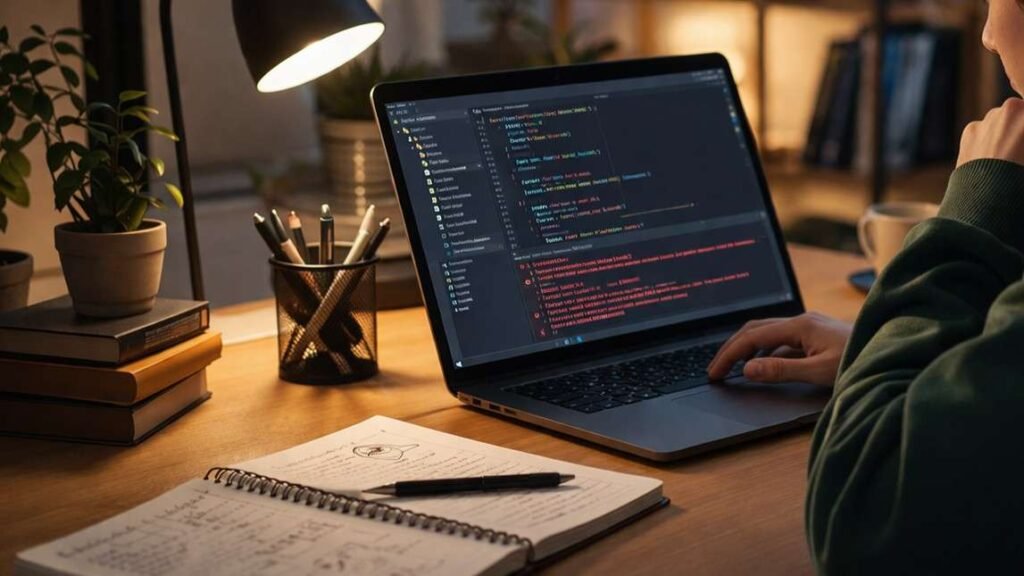
The first thing I focused on was building a consistent habit. Instead of long, irregular sessions, I coded daily for a short period. This helped me stay connected to what I was learning and reduced the time needed to get back into flow.
Next, I made it a rule to understand every piece of code I wrote. If something worked, I asked myself why. I also read error messages carefully and debugged step by step instead of guessing solutions. This improved my problem-solving ability quickly.
Finally, I started building small projects regularly. I stopped waiting to feel ready and learned along the way. Each project revealed new mistakes, but also helped me fix them faster. Over time, coding became more natural and less intimidating.
Frequently Asked Questions
1. What are the most common beginner coding mistakes to avoid?
Skipping basics, copying code blindly, ignoring errors, and avoiding projects are the most common mistakes beginners make.
2. How can I avoid beginner coding mistakes faster?
Focus on one language, practice daily, read error messages, and build small projects consistently to improve quickly.
3. Is it okay to use tutorials while learning coding?
Yes, but do not rely on them completely. Always practice independently after following a tutorial.
4. How long does it take to overcome beginner mistakes?
With consistent effort, most beginners see noticeable improvement within a few weeks of focused practice.
Smarter Growth and Better Coding Habits
Looking back, fixing these beginner coding mistakes to avoid was less about intelligence and more about awareness and consistency. Once I changed my habits and focused on understanding instead of rushing, everything became clearer. If you stay patient, practice daily, and keep learning from your mistakes, coding will slowly start to feel natural and even enjoyable.