

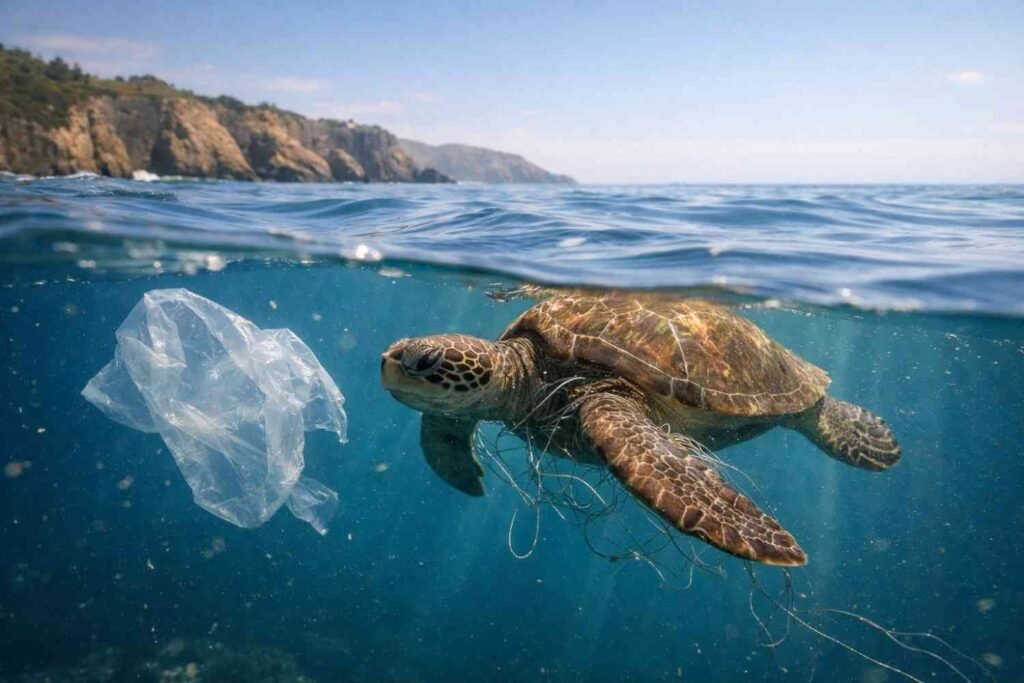
I still remember the first time I saw a sea turtle with a deep scar across its shell. It was swimming slowly near a reef edge, and at first glance, it looked healthy. The guide explained quietly that many animals survive entanglement but carry those injuries for life. That moment stayed with me because it revealed something uncomfortable: the ocean doesn’t look broken on the surface, but many animals inside it are living with constant human-caused stress.
When we talk about the threats facing marine animals today, it’s tempting to imagine distant problems like melting ice or floating trash islands. Scientists now describe ocean life as being in a state of emergency, driven largely by human activity over the past few decades. Understanding what’s actually harming ocean animals requires looking at the biggest threats in order of impact.
The Biggest Threat: Overfishing And Marine Exploitation
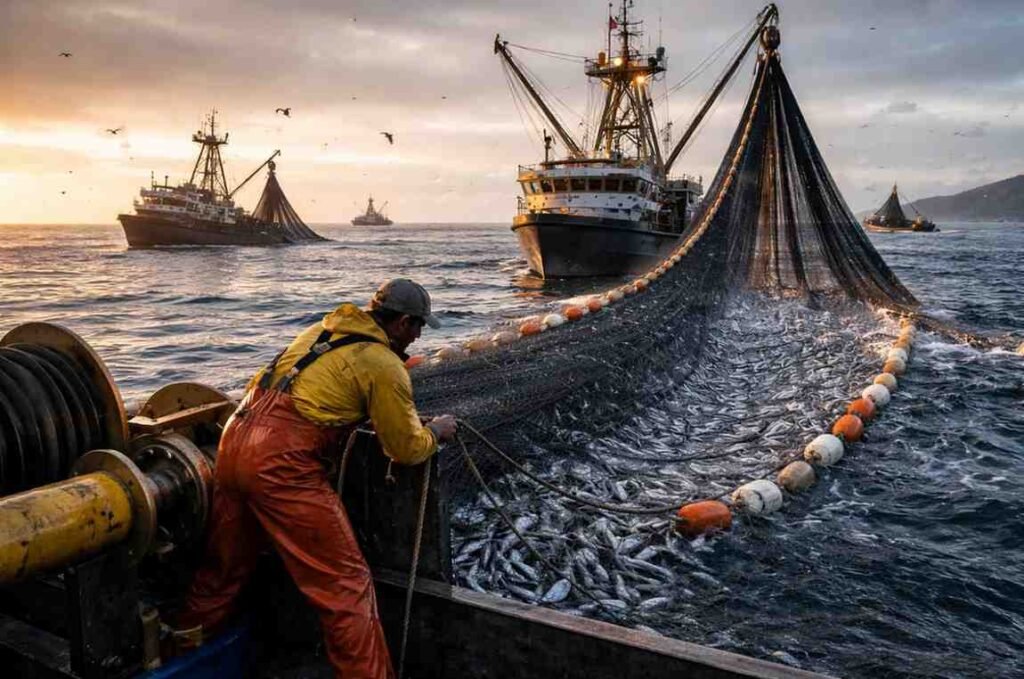
Among all threats to marine animals, industrial fishing has had the most direct and measurable impact on biodiversity. Marine ecosystems evolved with natural predation, but not with massive fleets removing millions of tons of biomass every year. Today, more than a third of global fish stocks are overfished, meaning populations are harvested faster than they can recover.
Even when released, many animals do not survive the trauma or injury. Then there is ghost gear: abandoned nets and lines that continue trapping marine animals for years, drifting silently through habitats.
These fishing pressures reshape entire food webs. When top predators decline, prey populations surge, vegetation changes, and ecosystems shift. That cascading effect is one of the most serious marine ecosystem threats today.
Climate Change Is Reshaping Ocean Habitats
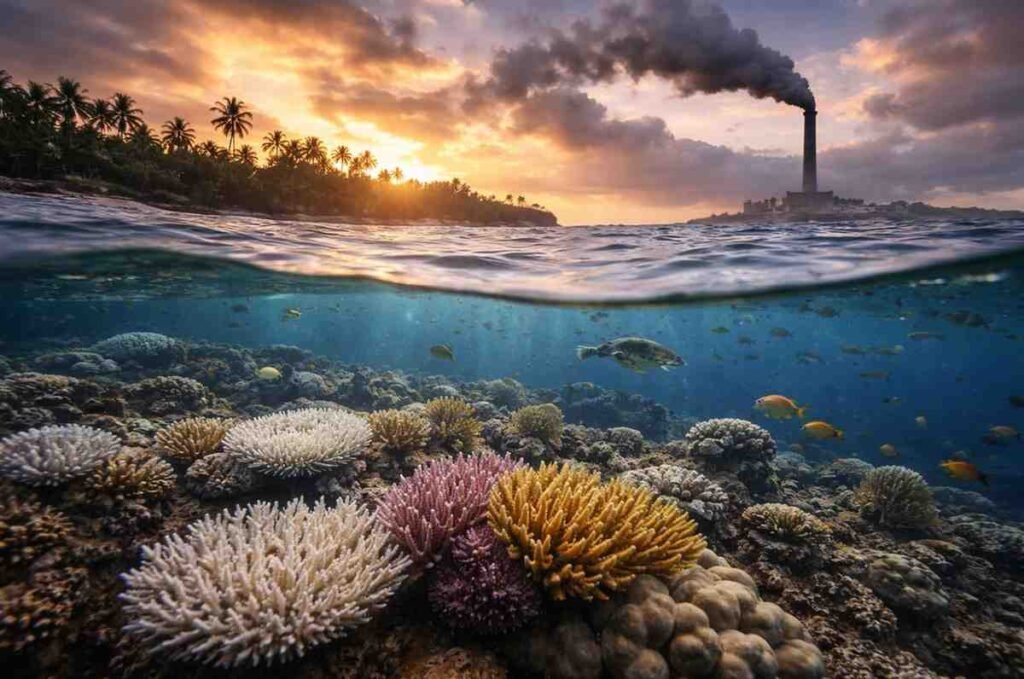
The second major category in the threats facing marine animals today is climate change, but not only in the familiar sense of warming temperatures. The ocean has absorbed most of the excess heat from human emissions, and that heat is transforming marine environments from the surface to the deep sea.
One visible outcome is coral bleaching. Heat stress disrupts the symbiotic algae that corals depend on, causing reefs to lose color and, eventually, structural integrity. Between 2023 and 2025, heat stress affected the vast majority of reefs globally. For reef-dependent species, this means loss of shelter, food, and breeding space all at once.
Warming water also holds less oxygen. This creates expanding low-oxygen zones where fish and invertebrates cannot survive. These changes combine to create habitat loss at a chemical level, not just physical destruction.
Pollution: Plastic, Chemicals, And Noise
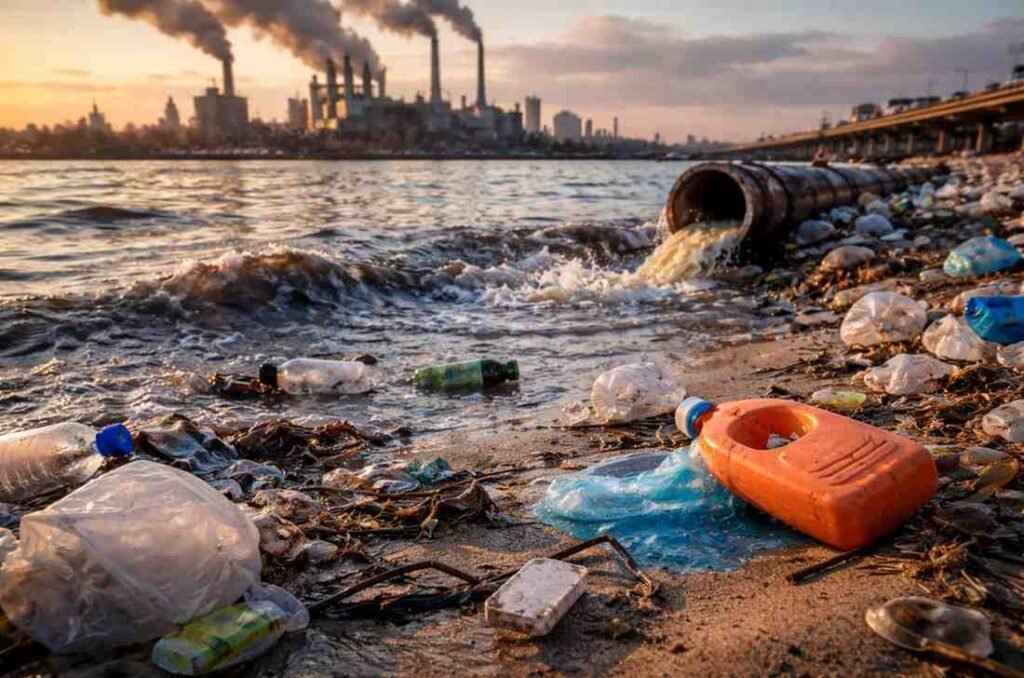
Pollution is often the most visible of the dangers to ocean life, but its impact goes beyond floating debris. Most ocean pollution originates on land and enters through rivers, runoff, and coastal discharge. Plastic alone accounts for the majority of marine debris, with millions of tons entering the ocean each year.
Animals ingest plastic fragments mistaken for food or become entangled in larger items. This means pollution is embedded in the food chain itself.
Chemical pollution adds another layer. Agricultural runoff carries fertilizers and pesticides into coastal waters, triggering algal blooms that consume oxygen as they decay.
Less obvious but increasingly studied is underwater noise. Shipping, construction, and sonar create persistent sound that interferes with how marine mammals communicate and navigate. For species that rely on sound to hunt or locate mates, noise pollution alters fundamental behavior. It is a growing but under-recognized ocean threat to wildlife.
Habitat Loss And Coastal Pressure
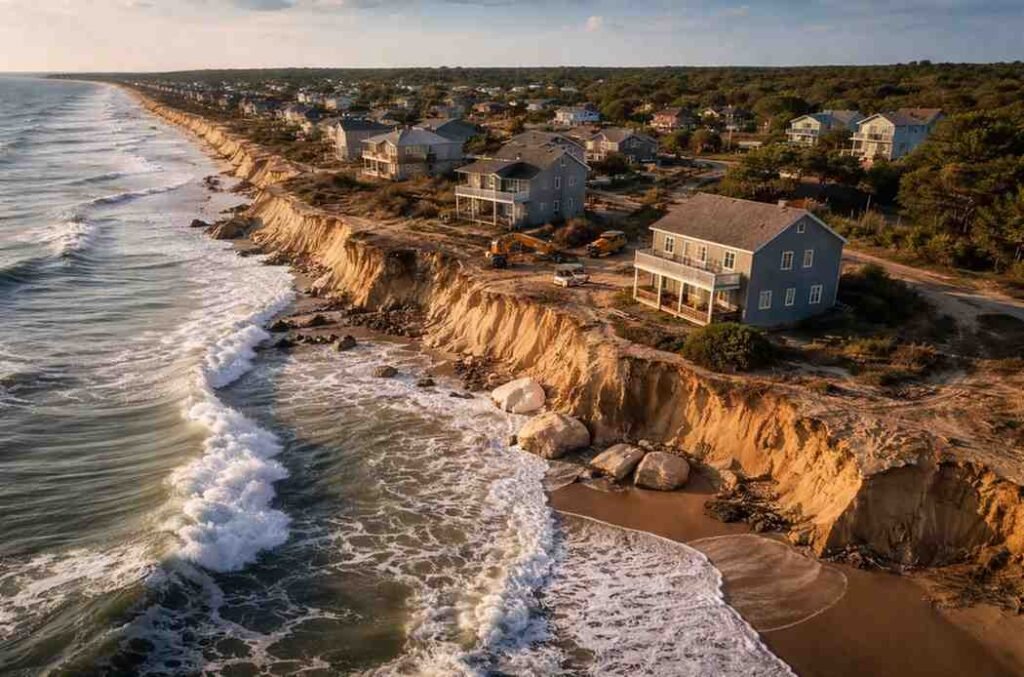
Habitat destruction completes the core set of marine conservation threats. Coastal development, dredging, and destructive fishing practices physically remove or degrade ecosystems such as reefs, seagrass beds, and mangroves. These habitats serve as nurseries, feeding grounds, and protection zones for countless species.
Since the mid-20th century, a significant portion of living coral and mangrove cover has been lost. Without these nature-based act, juvenile fish survival drops, shoreline ecosystems weaken, and biodiversity declines.
Invasive species add further disruption. Transported in ballast water or attached to vessels, non-native organisms can outcompete local species and alter ecosystem balance. For marine animals already stressed by fishing and climate change, these added pressures compound survival challenges.
How Multiple Threats Combine
Marine animals rarely face one threat at a time. A turtle may encounter plastic ingestion, warming waters affecting food availability, and fishing gear entanglement during the same migration. Coral reefs may experience bleaching, pollution, and overfishing simultaneously.
This cumulative stress is why scientists emphasize that the threats facing marine animals today are interconnected rather than isolated. Ecosystems weakened by one factor become less resilient to others.
Why These Threats Matter Beyond The Ocean
Ocean health supports fisheries, coastal protection, and climate regulation. When marine biodiversity declines, food systems, economies, and ecological stability follow. Many marine animals also serve as keystone species, meaning their presence shapes entire ecosystems.
Protecting ocean life is therefore not only about conservation; it is about maintaining planetary balance. The decline of marine animals signals broader environmental change already underway.
Key Drivers Behind Ocean Threats
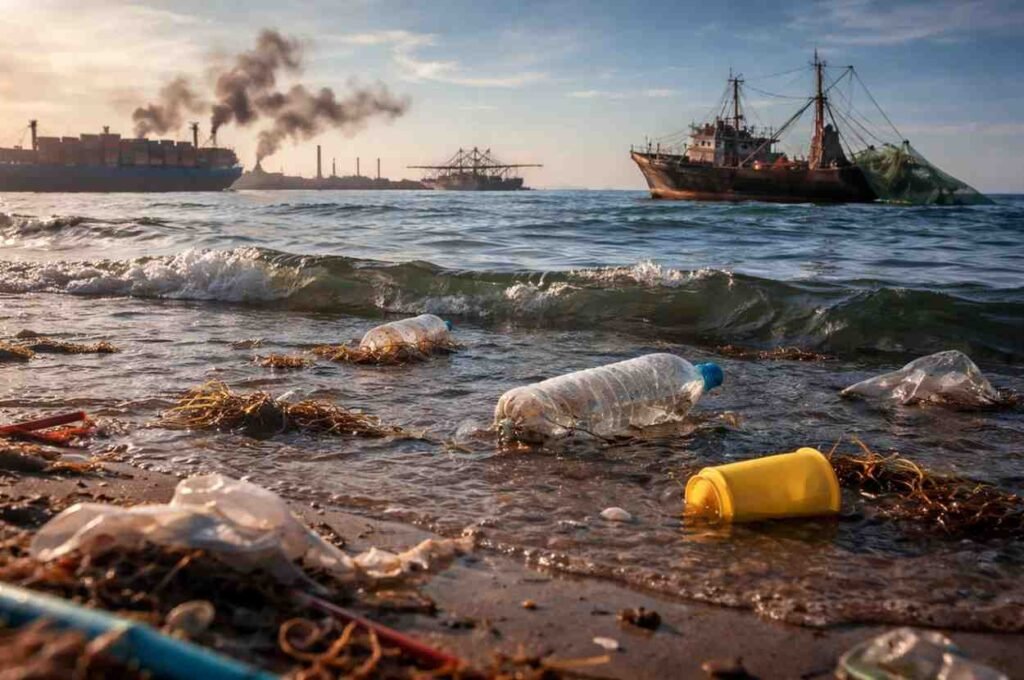
The major human activities contributing to marine ecosystem threats include:
- Industrial fishing and gear loss
- Fossil fuel emissions and warming
- Plastic production and waste leakage
- Agricultural runoff and chemicals
- Coastal development and dredging
These drivers explain why marine pressures have intensified over the last half-century.
FAQs: What’s Really Harming Ocean Life? The Threats Facing Marine Animals Today
1. What are the biggest threats facing marine animals today?
The most significant threats are overfishing, climate change, pollution, and habitat destruction. These pressures often occur together, amplifying impacts on marine species and ecosystems.
2. How does plastic pollution harm marine animals?
Animals ingest plastic or become entangled in debris. Microplastics also enter the food chain, exposing marine organisms to physical and chemical stress.
3. Why is overfishing dangerous for ocean ecosystems?
Removing large numbers of fish disrupts food webs, reduces biodiversity, and weakens ecosystem stability, affecting many species beyond the targeted catch.
4. How does climate change affect marine life?
Ocean warming, acidification, and oxygen loss alter habitats, cause coral bleaching, shift species ranges, and reduce survival for many marine organisms.
Final Thoughts
The reality behind the threats facing marine animals today is not a single dramatic event but an accumulation of human pressures reshaping the ocean over time. Fishing intensity, warming waters, pollution, and habitat loss are converging in ways marine ecosystems have never experienced before. Many species are adapting where possible, but adaptation has limits when environmental change outpaces biological resilience.
Ocean life is remarkably resilient, yet resilience depends on conditions remaining within survivable bounds. The current trajectory shows how quickly those bounds can shift and how closely marine health is tied to human choices on land and at sea.